Getting out of my head with Camp Miasma
”What the heck are you watching?” is a phrase I occasionally hear from my wife when I am watching a movie and she glances at the screen. Sometimes it is ”Ugh, that is disgusting” or ”I see you are watching porn again”. Admittedly, I am not exactly making it easy for myself as I have a thing for sleazy erotic thrillers by Brian DePalma and Paul Verhoeven, Italian giallo films or American ‘80s slashers. These are whole genres of film whose defining feature is finding aesthetically great-looking ways to show beautiful (and scantily clad) young women being killed with sharp objects. I am not a fan of the term guilty pleasure, though in a slightly different meaning - it applies here.
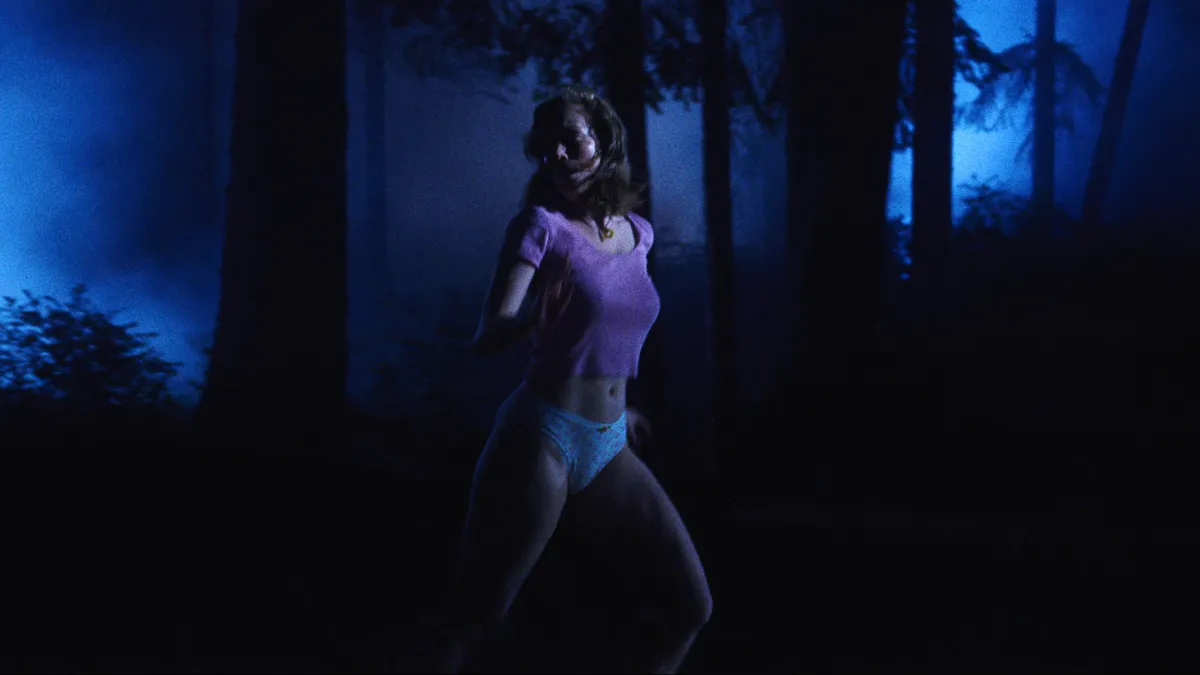
Enter Jane Schoenbrun’s latest movie, Teenage Sex and Death at Camp Miasma, a movie that very directly, and loudly, asks the viewer to think about our own desires, our shame and to get out of our heads and into our bodies. Flesh and fluids.
Note that this essay of sorts contains thematic spoilers for the movie. I encourage everyone to watch it
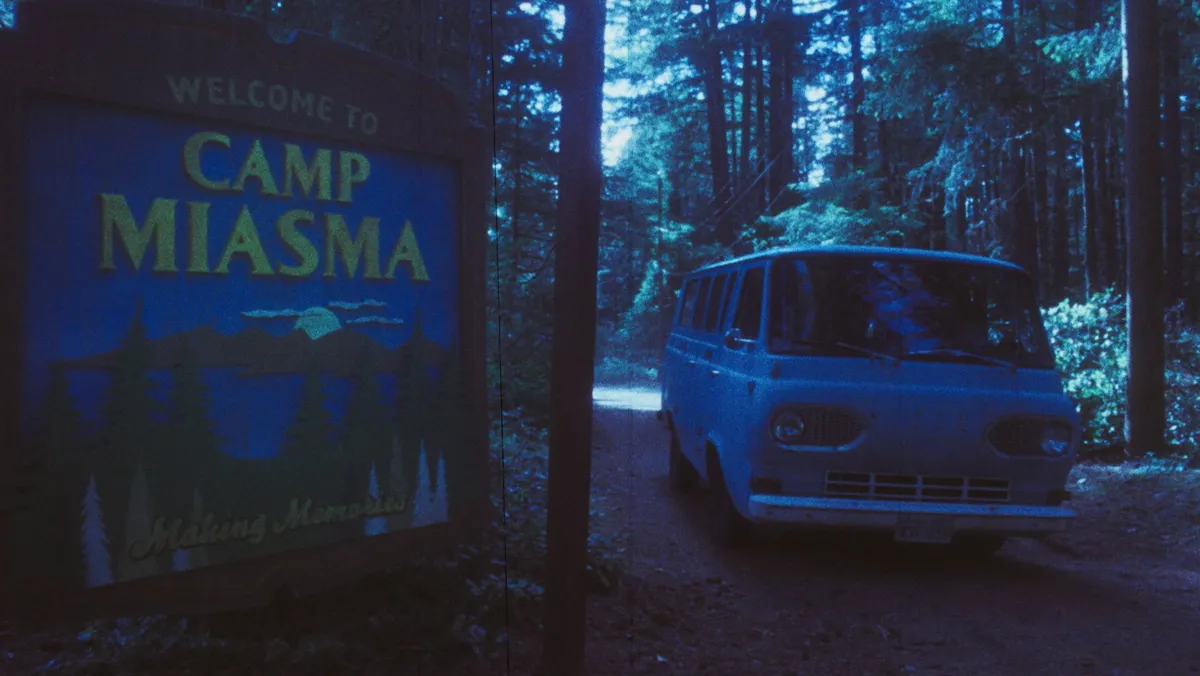
Eroticized death
Camp Miasma is a massive love letter and reference fest on the ‘80s slashers, especially Friday the 13th and Sleepaway Camp. A genre with some roots in Italian giallo, which is where my fascination started, and it has always carried with it a good degree of controversy. The violence is one thing, but the combination of violence and sex is where things get dicey. Giallo films came out of the Italian cinematic tradition with gorgeous cinematography and sensual framing, and applied to explicit murder mysteries we get a very artistic depiction of gruesome murders. Watching it just lands differently than a more - let's say - literal interpretation of a murder scene. It is aesthetically pleasing to look at and the whole framing can have a very eroticised look - and quite often the victim is a young beautiful woman - clothes optional. The screams and final sigh of breath as death occurs undeniably has some resemblance to an orgasm. The American slashers work within similar paths, though with a different focus on mostly teenagers having sex and then later getting killed off. This often shameless connection between sex and death is part of the allure of these films, and there is a whole academic tradition diving deeper into it.1
I think these films work on a level that isn’t about sexual arousal as such, as it works on many different cinematic registers that don’t share anything with pornography. Instead it builds on the bodily senses: film techniques that hide the killer from the screen, the musical score giving you goosebumps, the tense atmosphere from the frightened victim. And the victim usually being a young, sometimes scantily clad, woman is another dimension on top. You stop thinking and start feeling (as the plot in many of these movies are really kind of nonsensical). I admit it can feel a little bit forbidden to like these things, and my wife’s puzzled questions adds to that.2
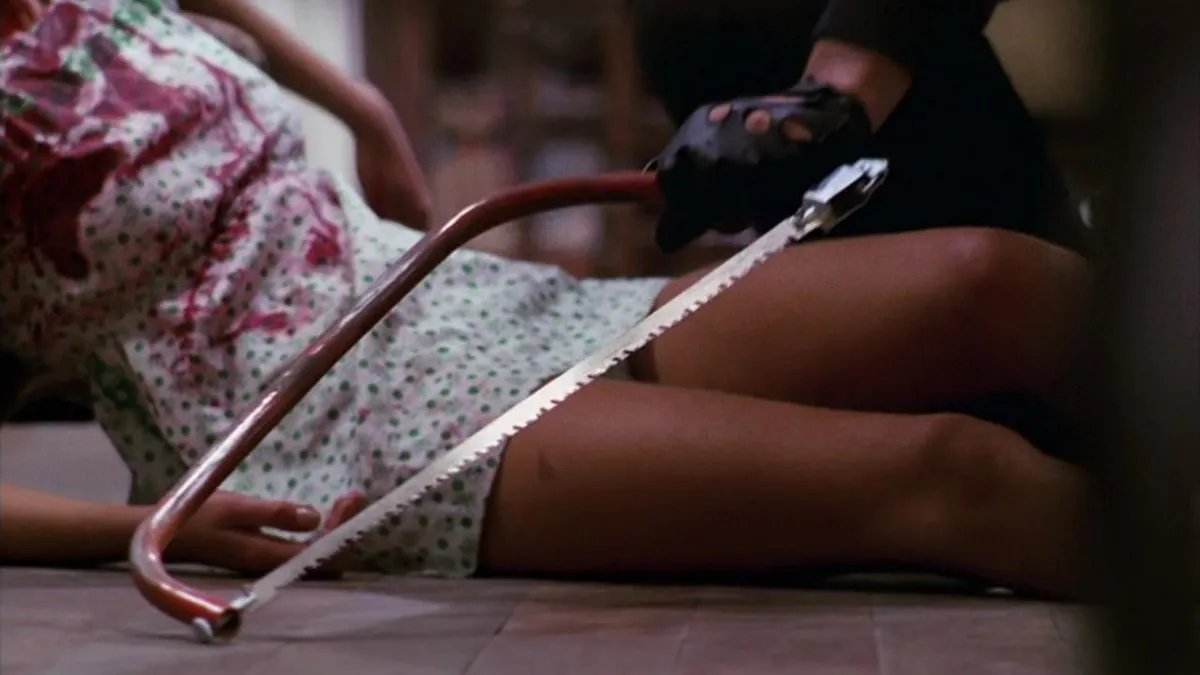
The link between sex and death is nothing new, and goes all the way back to the 19th-century with the term Le petite morte (the little death) as a reference to orgasm. Camp Miasma makes that very literal as the masked killer is called Little Death and plays a very direct role for the main character to achieve sexual satisfaction.
Sex, power, shame and consent
Mainstream cinema has a long habit of framing sex in terms power, conquest and the male gaze. There is no lack of movies showing the power dynamics at play, mostly with the male as an aggressor - or at least the one that takes initiative. Like Connery in the old Bond movies, where he sometimes literally slaps woman into having sex with him. The saying "Everything is about sex except sex. Sex is about power” has some truth to it, but it isn’t the whole picture. Sex is also about consent and consent is sexy.
In 2021 Denmark got a new law on the definition of rape, moving away from a definition that required violence or threats of violence to one where there is lack of consent. Unsurprisingly, the initial reaction was a misunderstood backlash as it would be “the end of flirting” or sex would now require written consent form signed by lawyers or whatnot. Some expressed that they found it awkward to “ask for permission”, and I think some of that cultural norm has been formed by how many movies have depicted sexual advances. The alternative has been much rarer at least.
The reason I mention this is because Camp Miasma follows a cultural shift towards the positive narrative of making consent, and basically “asking”, the better approach to sex. But the great thing about Camp Miasma is that it is far from reactionary. It is not disregarding the understanding of sex as about power as such. It is instead building a thematic narrative where shame, power and consent - in a safe space setting - forms the path to sexual freedom.
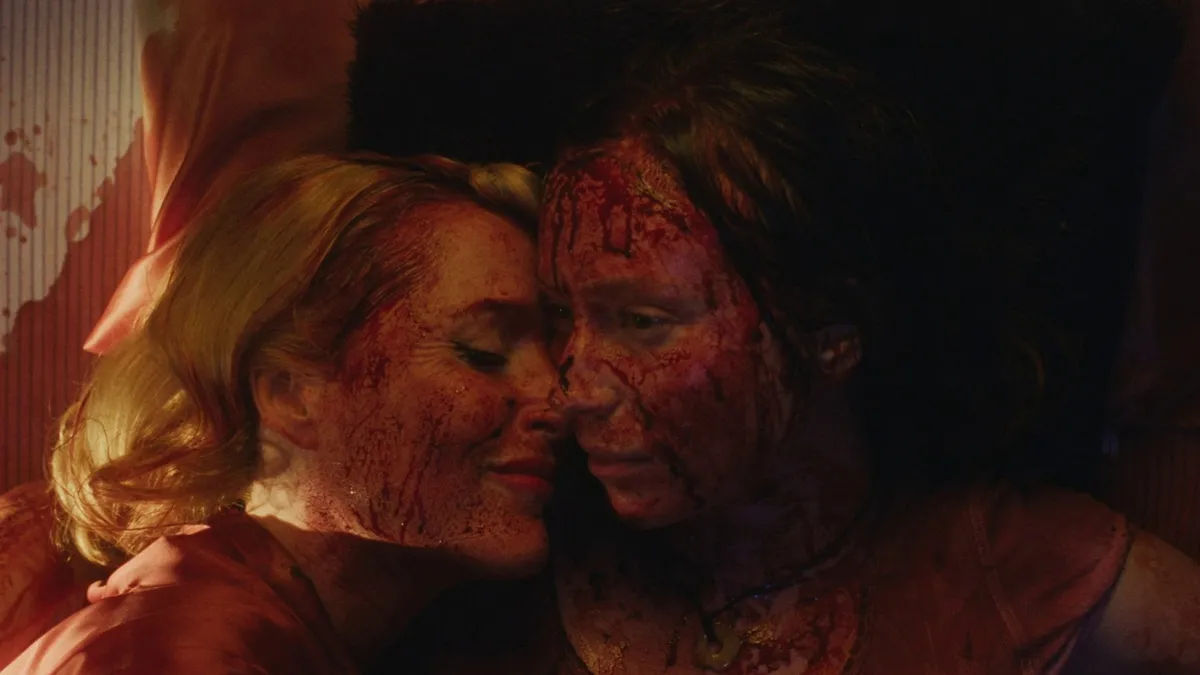
In the movie, Kris - played by Hannah Einbinder, is bad at sex - according to herself. She can’t relax enough and be comfortable with her own desires with another person. With help, and some pushing, from Billy - played by Gillian Anderson, she confides her fantasy is to be a final girl in a slasher movie. Her wish is granted and she basically orgasms from being speared by Little Death. Very symbolically, metaphorically and literal at the same time.
On this, Schoenbrun says:
I do not think sex can be laundered of its darkness. Clearly, it is coming from a place where, without even thinking about it, we are interrogating the deepest and darkest parts of ourselves and fundamental societal taboos and the threshold between life and death. Everyone’s got fucked-up sex shit going on. And the healthy response to that as a society isn’t just to not have it or ignore it, because that’s how you get fucked-up fascists. The way to deal with it is to find someone that you trust, say “if it gets too real, you can always turn it off,” get a bunch of candy, and open up parts of yourself that feel scary to expose.3
The movie shows that “sex is about power” is not wrong, and Billy is very literally pushing to Kris’ boundaries - to make her reach over the edge, and it holds the duality of building all that within a very safe environment where Kris can confide her inner desires without judgement. I also thinks it is no coincidence that this is between two women, as having a man in the equation would have muddled the whole complex dynamic. The movie is unique it how it uproots both the new and old movie industry approach to depicting sex on screen and it deserves great praise for it.
From the head to the body
It is also no coincidence that Schoenbrun used a horror movie framework for this point. It comes from a deep love for the genre, and also clearly aimed at cinephiles. It is filled with references that make the Letterboxd crowd happy and ties into recent years of questioning problematic parts of especially older horror movies. The movie isn’t anti-woke, instead it removes the shame of loving problematic art. It is okay to appreciate and acknowledge the problematic parts at the same time. The cure is basically to stop intellectualising, stop being in our heads and listen to what the body is telling us. This point can be applied both to watching movies and to sex, and I realise the irony here that I have basically analysed this movie to death - or being in my head, when Schoenbrun is telling me to do the opposite.
As I was rewatching this I scribbled down quick notes and analytical remarks, and it is has very much been a thinking movie for me so far. But - seeing it first time in the theater was a different experience, with a bombardment of the senses. Not knowing much about it beforehand helped, and the constant surprises and twists made it difficult to get a clear grasp on what type of movie it actually was. Then the senses take over from the analytical mind, and afterwards I was pretty confused to what effect the movie had on me. This led me down a path of diving into interviews, academic references, analytics, thematic interpretations and references. The result of that is this blog post so far.
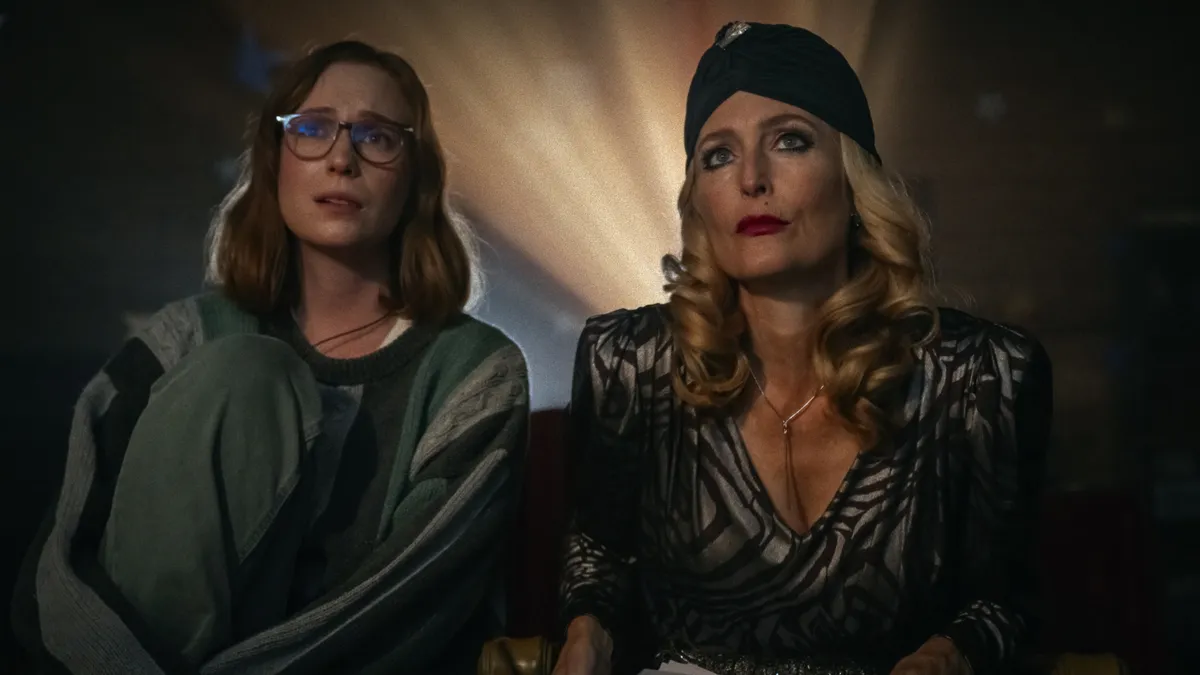
Camp Miasma is almost obnoxiously loud with its stylistic choices and conceptual ideas, a full bombardment of the senses tailormade to film lovers with ridiculous blood geysers, beautiful mattes painted backgrounds, references to classic cinema and genre tropes. But it overflows - and ends up in a place where logic goes out the window and as Kris in the movie, I as a viewer end up succumbing to stop trying to decipher everything and trust what my body is telling me.
It’s like, let’s turn off the lights, and go on a journey that’s going to be both bad for you and good for you in the way that the art that I love is.3
Erotics of art
Susan Sontag has in her essay "Against interpretation" termed the concept of “erotics of art”4 and I think Camp Miasma is a great vehicle for understanding this. While I have written a great deal about the link between sex and death in these type of films, the allure isn’t about sexual arousal as such. “Erotics of art” isn’t about sexual eroticism, but about focusing on the senses a work of art is doing. Its form, color, texture, sound. This it what makes me cry at the end of Con Air, make me giddy from the colors in Suspiria and Goblin’s score, or completely mesmerise me when Vicky dances in The Red Shoes. It bypasses the interpretation mechanism when the senses take over.
And like for Kris in Camp Miasma, there can be elements of shame that holds us back. Like isn’t a bit lame to cry to a Nicolas Cage action movie, or perhaps a bit weird to seem excited about half naked Italian women being mutilated to a funky 70s score? A repeated tagline in Camp Miasma is “If it gets too real, you can always turn it off” - which can be taken both literal when it comes to movies or as basically a safe word during sex. Point being, we should remove the shame, stop overthinking and accept the bodily sensations - and remember to enjoy them!
Schoenbrun has stated multiple times that they wrote this movie as a reflection on their own queer awakening and learning to enjoy sex after transitioning, and the movie’s metaphors on it are in plain sight. But as other great movies, its themes are not limited in that sense, as there is a universal experience and self-understanding for everyone to ponder.
I really think about this movie as sex. Like, the structure of this movie is queer sex. Or the structure of this movie is whatever the female orgasm is. So, yeah, there’s foreplay, and then there are these ecstatic ruptures that take you back into a space of safety and calm and maybe even darkness, in the same way that that sex scene between the two of them stops and then starts again, by the fire. The movie’s kind of having sex with the audience.3
Though the jury is probably still out on whether all this is just me looking for an elaborate pretentious excuse for liking seeing scantily clad females being chased by big sharp phallic objects.
Like Men, Women and Chain Saws from 1992↩
She also has an uncanny timing in entering the living room in the middle of a sex scene. Even in films where the odds should be low, like Dances With Wolves - an almost 4 hour western of loneliness and of course she opens the door in the few minutes Kevin Costner finds love in a tent.↩
Quotes by Schoenbrun from "If It Gets Too Real: Jane Schoenbrun on Teenage Sex and Death at Camp Miasma" on Mubi.com↩
I can recommend this blog post for an introduction to the concept or this YouTube video.↩