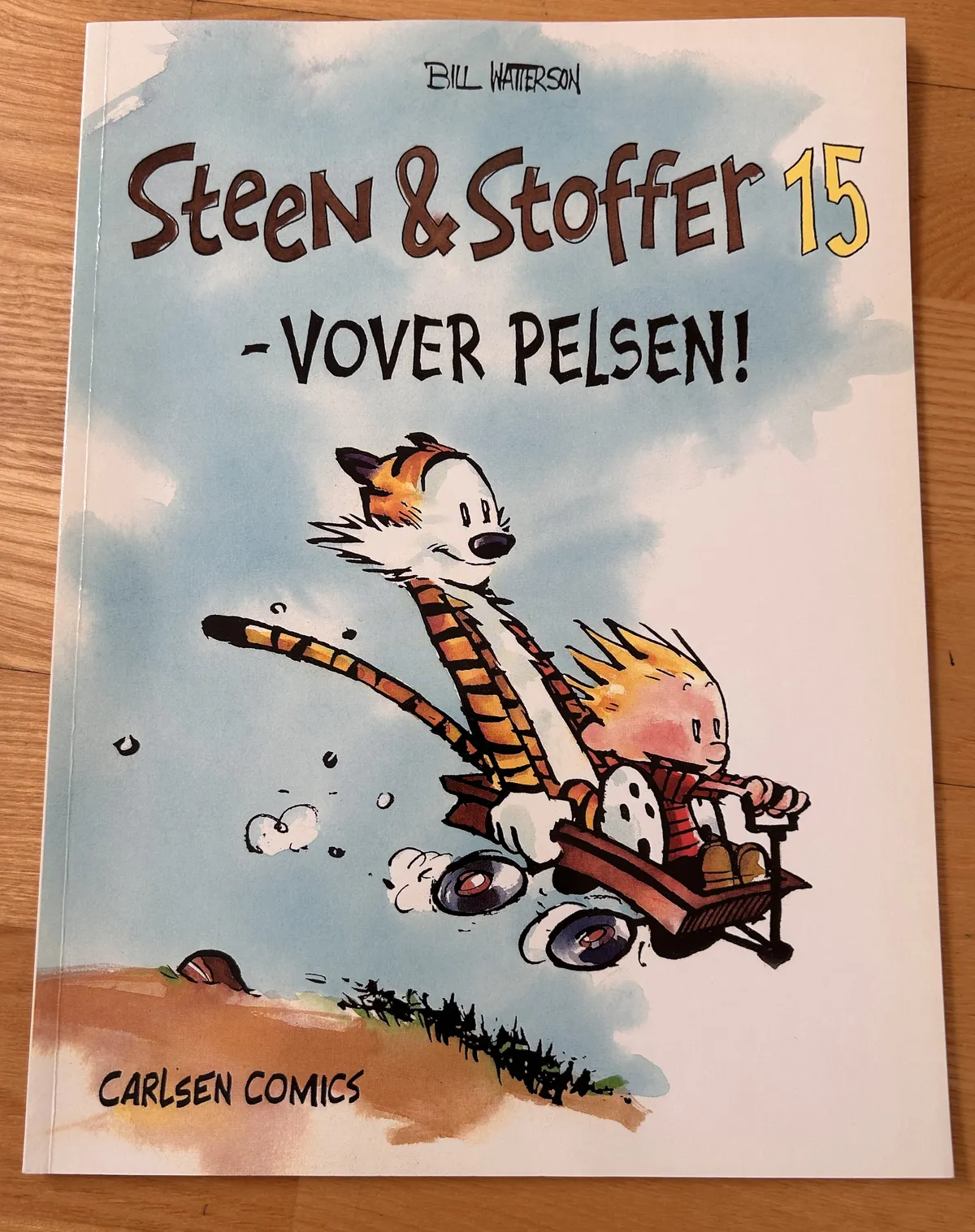
Nostalgia for Calvin and Hobbes
Calvin and Hobbes likely doesn’t need any more praise for being the unique cultural achievement it is as one of the most acclaimed comic strips of all time. Everyone agrees on that already. So this post is mostly about my own personal journey with the strip and why I can’t help but feel nostalgic about it.
I know almost down to the date when I first discovered Calvin and Hobbes. It was in the spring of 1995 while I was in my parents’ summer house where I bought this magazine called Serieparaden at the local small supermarket.
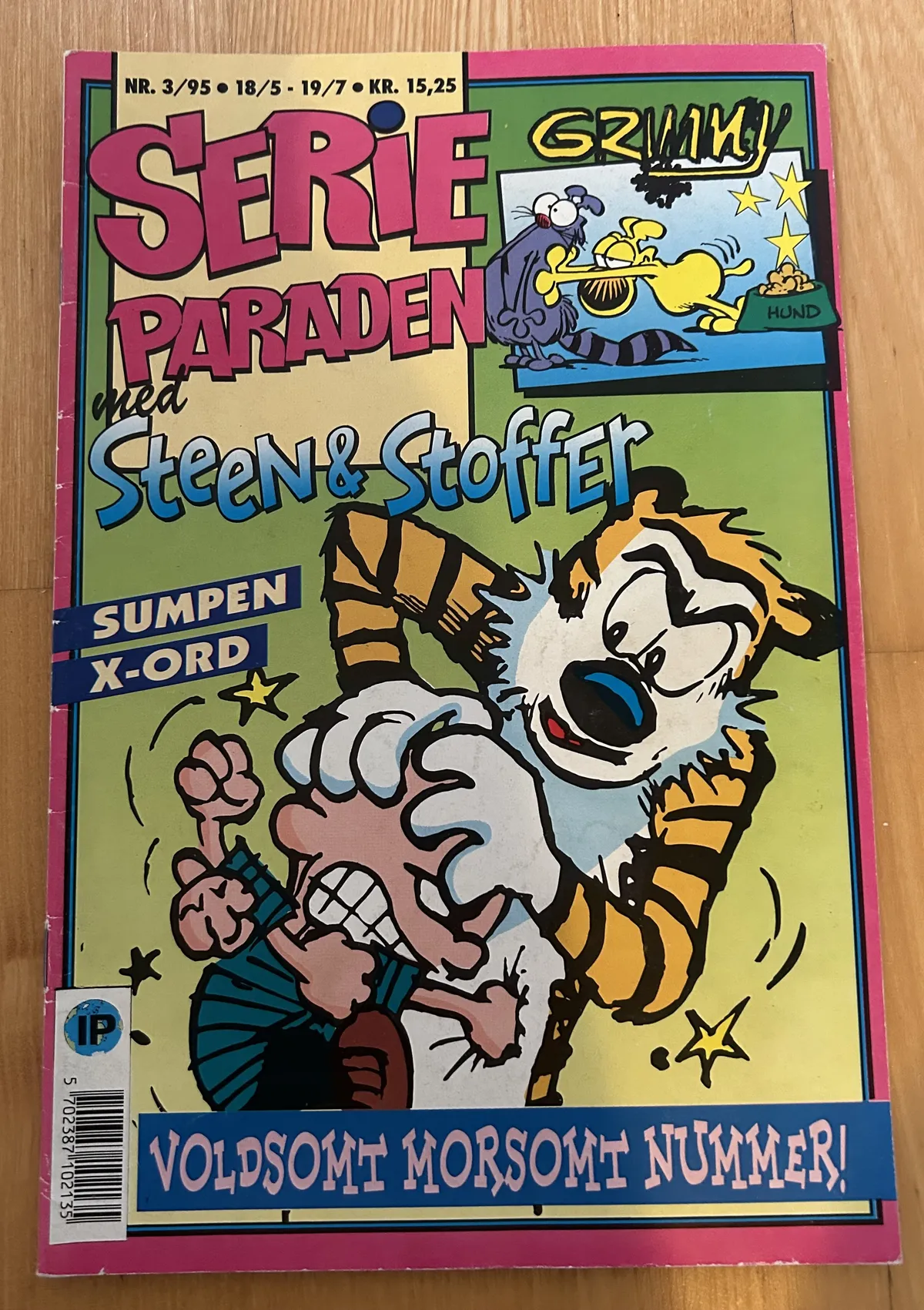
What’s interesting about this magazine is that, unlike the superhero magazines or the ones focused on the likes of Garfield or Donald Duck, it wasn’t tied to a specific universe. As the title suggests, it was a parade of series, just a collection of different comic strips. Of course, Calvin and Hobbes was the main event throughout the lifetime of the magazine, but they also had stuff like Swamp, Hagar the Horrible, Zits and Gary Larson’ The Far Side. The lineup changed frequently, but Calvin and Hobbes was the stable entry. After getting this issue I got a subscription which I held until the magazine ended in 2001. I also collected back issues and I think I actually have a complete set back to its start in 1989, or close to at least.
As you can see from the picture, in Danish Calvin and Hobbes was called Steen og Stoffer. Steen is a common Danish name, and Stoffer is, I assume, a play on the fact that he’s a stuffed animal. Phonetically, it also sounds nice to say Steen og Stoffer.
My first encounter with the strip was therefore the Danish translation in this magazine, where the dailies were colored. As I learned, in the original only the Sunday strips were in color. I didn’t think much about it at the time, but later, when I discovered the originals, I came to appreciate that style much more.
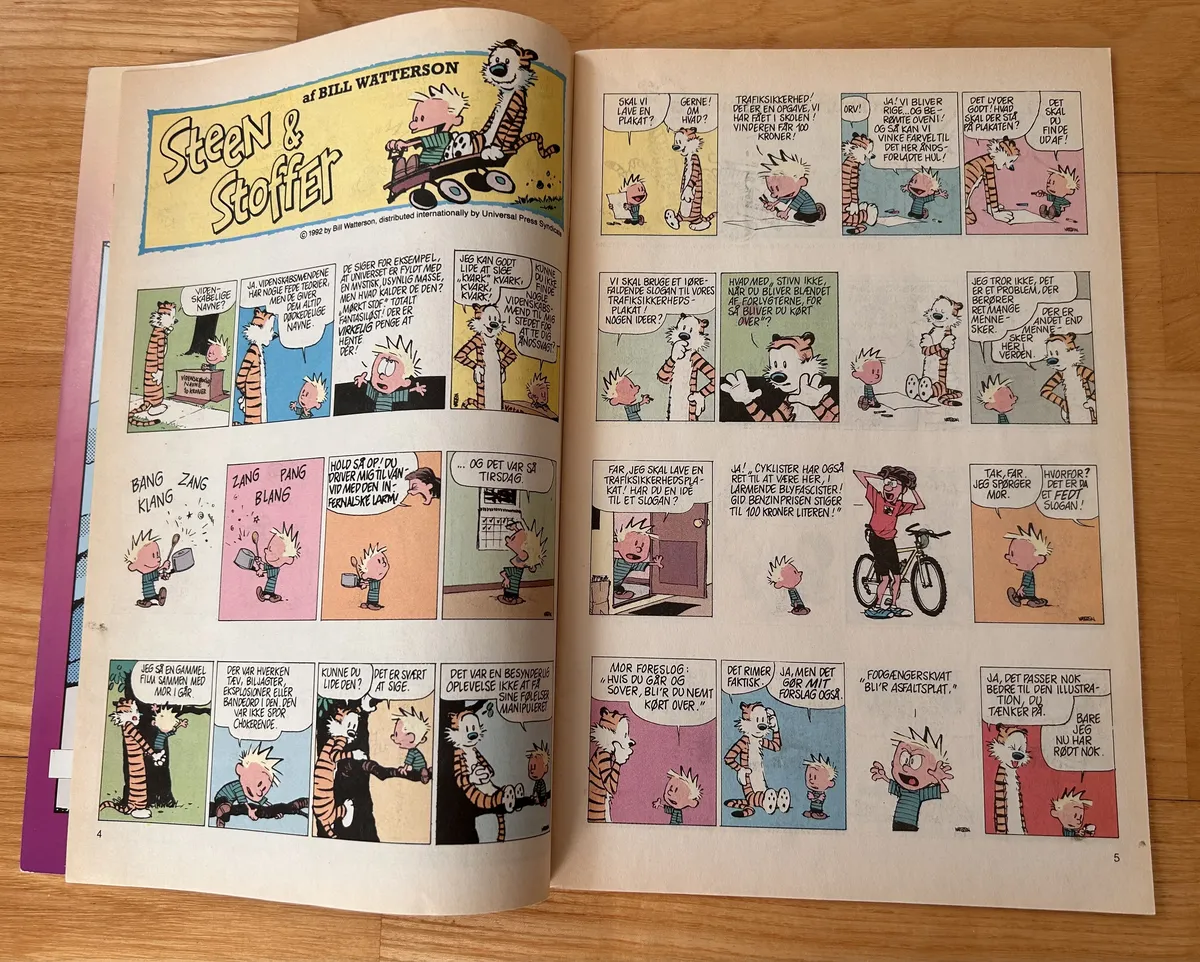
I don’t know who did the translations in this magazine, but they were different from the more official Danish translation in the collected albums, which I also bought later. Those were translated by Niels Søndergaard, a very well-known Danish translator. He has done a lot of movie subtitles and other comic strips and is generally highly regarded in this field. As I grew older and began reading the strip in English, I could conclude that his translations were, in general, very close to the source material. He didn’t feel the need to change many punchlines or references, except perhaps a few that referred very American references. That also says something about how Calvin and Hobbes, while written and set in the American midwest in the 1980s, is essentially timeless and touches on very universal themes.
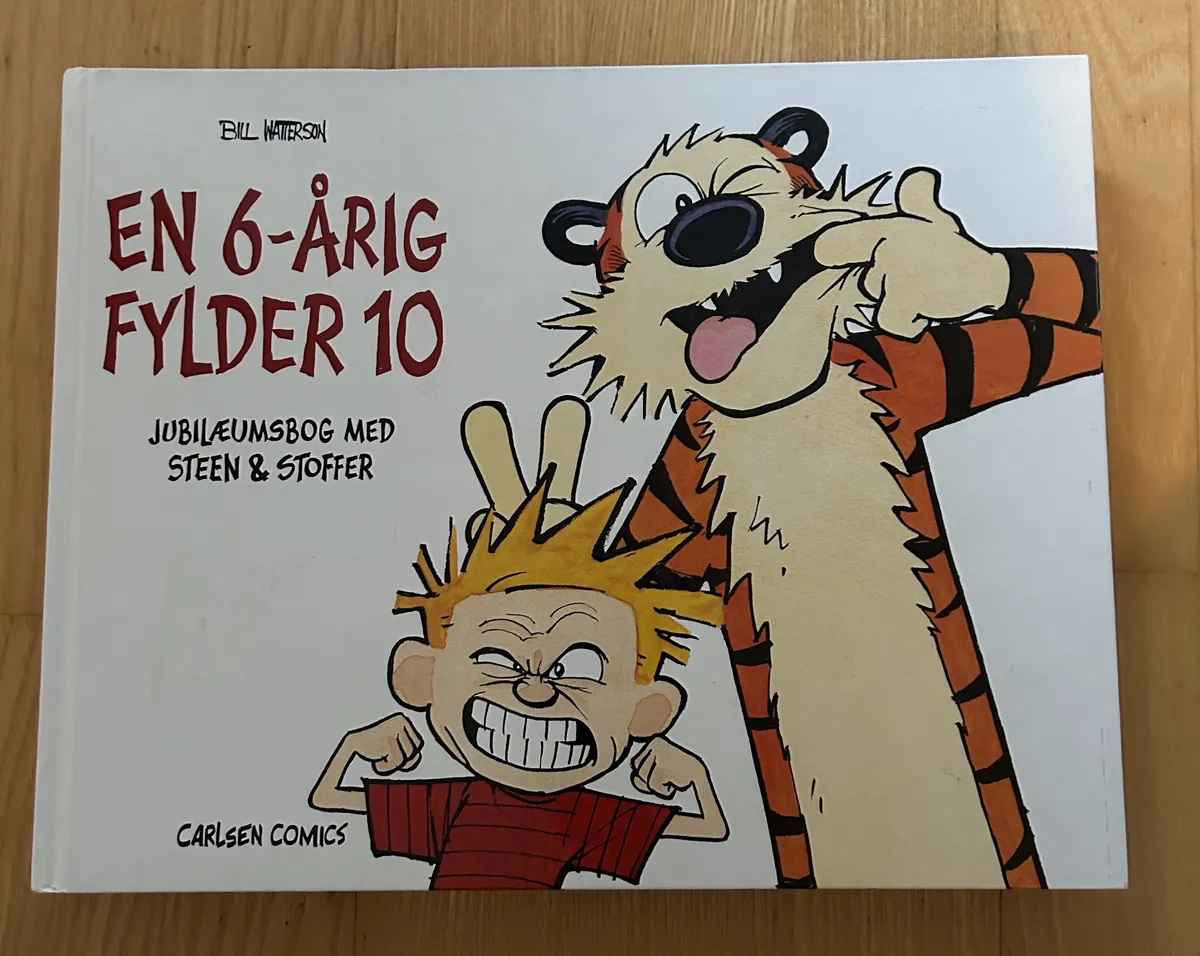
Don’t remember exactly when but I think got the Tenth Anniversary Book as a Christmas or birthday present, which is a goldmine, with individual commentaries by Bill Watterson on some of the most popular strips, where he explains his reasoning and ideas and how certain things came together. I have been through that book countless times. This was also when I started to understand the strip at a deeper level and it became a thing I dived more into the analysis of it in ways I didn’t do with other comics I read at the time. And quite recently, I got myself the Danish version of Exploring Calvin and Hobbes: An Exhibition Catalogue which has a lengthy interview with Watterson. A rare thing as he has given very few interviews throughout his career.
What fascinated me as a kid was, of course, that it was fun to read about a young boy and his imagination. But it also challenged you as a reader. Calvin has a surprisingly large vocabulary for a six-year-old and understands many things that would normally be outside the expected range for his age. At the same time, his childlike logic often shines through, and he completely misunderstands things or is clueless about ordinary matters. That combination was what made it so interesting. When you read it, you would sometimes encounter ideas that were a bit over your head, but you sensed that there was something intriguing there.
I think that’s a great way to challenge kids, rather than only giving them material aimed strictly at their age level. I know that the Danish translator for Donald Duck also deliberately used long, complex, sometimes old-fashioned words in the Danish editions. When reading Donald Duck, you would occasionally come across a word and think, what is this? Then you would have to look it up in a dictionary or ask your parents. It was a great way to expand your vocabulary and understanding, even though you were just reading a comic strip.
I am currently re-reading through the strips chronological in the Complete Calvin and Hobbes, and reading it as an adult is of course a different experience. Now I can say I very much relate more to especially Calvin's dad. His sarcastic teasing of Calvin is almost inspirational. Like some things about being a kid is just forever eternally universal, especially now that I have kids of my own. The stuff about not liking the food you're served, not wanting to go to bed, feeling bored and wanting stuff to be entertaining for you, and all that stuff. That just shows that kids have been kids like forever. Some things just never change. Watterson wrote the strip in many ways from an adult perspective, but still through a kid’s lens.
It shows the longevity of this strip as it is not strictly bound. Of course, the technology of the era it is set in, as we have an old tube TV and no smartphones or computers, Watterson is still clearly commenting on issues we are still dealing with today. Pollution and climate change comes up a couple of times in the strip. One great example is how Calvin engages with TV and the dads outspoken criticism of the media landscape. It's not far from how we talk about social media and internet culture today.
I am still engaging with it today as while researching this blog post, I also came across a podcast, The Magic of Calvin and Hobbes, that recently launched. They aim to do a weekly episode on Calvin and Hobbes, dedicating whole episodes to topics like Calvin’s dad, winter and snow, or minor characters. I can highly recommend it. It’s a fantastic podcast that really dives deep into speculating about what actually happens in the strip, mapping out how many times different characters appear, and exploring all sorts of details I hadn’t really considered when I was simply reading it myself.
To me, it feels like a testament to the rare status this strip has that is still loved and talked about 30 years after the last strip was printed. Bill Watterson is in my mind a very unique artist with a level of integrity that only a few can stand up to, and while it would have been great to have even more strips to read, that we still love it today means that he ended the strip right at its peak.